
Understanding Albinism
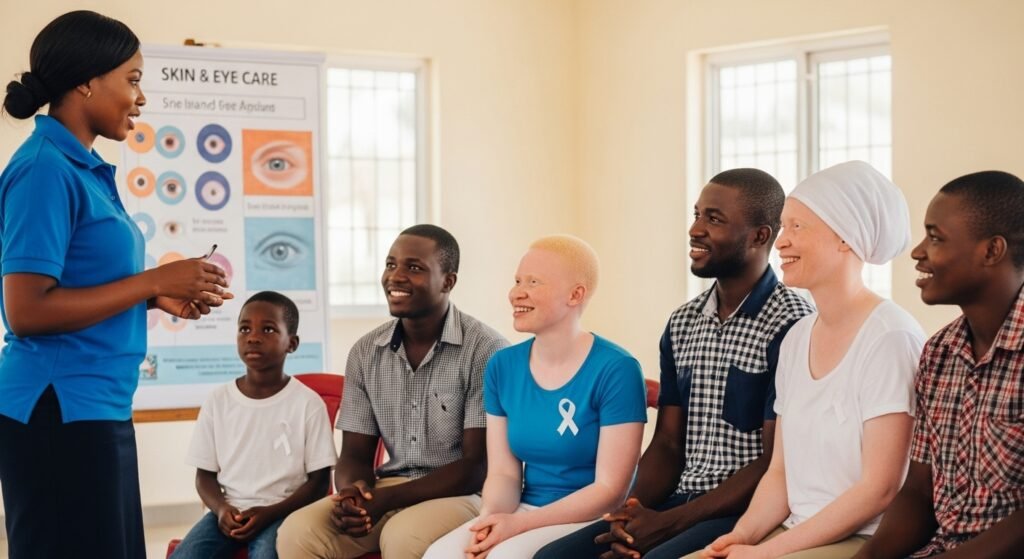
In simple terms; Albinism means a person is born with less or no skin color (melanin), which makes their skin, hair, and eyes lighter than others.
Albinism is a genetic condition that results in little or no production of melanin, the pigment that gives colour to the skin, hair, and eyes. Because of this, people living with albinism (often called PLWA) usually have very light skin, hair and eye colour compared to their family members.
Albinism affects people of all races and ethnic backgrounds, including Africans. It is not a disease or a curse, but simply a difference in colour tone caused by genetics. Persons with albinism are as healthy, capable, and intelligent as anyone else, but they may face unique challenges such as:
Sun sensitivity and vision issues, which require special care like sunscreen, hats, long clothing, and prescription glasses.
Social stigma and discrimination, often rooted in misinformation, myths, and cultural beliefs.
Limited access to healthcare, education, and employment opportunities due to bias or lack of awareness.
At the Albino Empowerment Foundation (AEF), we believe that public awareness and advocacy can change these realities. By raising awareness, supporting families and empowering persons living with albinism and educating the public, we help build a world where they are respected, supported, and celebrated.
Albinism is not a limitation, it’s simply a difference that deserves understanding by all, compassion and inclusion in every aspect of living.
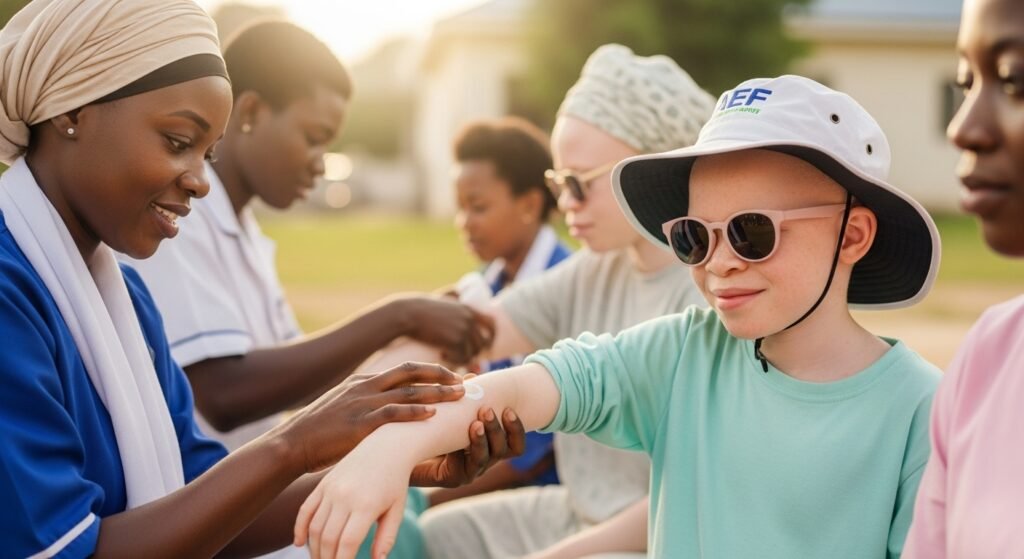
☀️ Caring for Conditions Associated with Albinism
People living with albinism can lead healthy, fulfilling lives with the right care and awareness. The key is protection, prevention, and proactive health support.
🧴 1. Protecting the Skin
Because of low melanin levels, the skin is more sensitive to sunlight. Protecting it helps prevent burns and reduces the risk of skin cancer.
Use broad-spectrum sunscreen (SPF 30 or higher) daily, even on cloudy days.
Wear wide-brimmed hats, sunglasses, and long-sleeved clothing when outdoors.
Avoid staying in direct sunlight between 10 a.m. and 4 p.m.
Visit a dermatologist regularly for skin checks and early treatment of any changes.
👁️ 2. Caring for the Eyes
People with albinism often have visual impairments due to reduced pigmentation in the eyes.
Get a comprehensive eye exam early in life and schedule regular follow-ups.
Use prescription glasses or low-vision aids as recommended.
Wear UV-protected sunglasses or tinted lenses outdoors to reduce glare and protect the eyes.
Encourage schools and workplaces to provide visual learning aids or seat adjustments to reduce strain.
🧠 3. Emotional and Social Support
Stigma, discrimination, and isolation can affect emotional health. Building confidence and support is vital.
Encourage open conversations about albinism at home and in schools.
Join or support AEF programs that promote awareness and community inclusion.
Celebrate achievements, confidence grows when society recognises ability, not appearance.
💪 4. Regular Health Checks
Visit a primary care doctor or dermatologist at least once a year.
Maintain a healthy diet and hydration for skin repair and general wellness.
Educate caregivers, teachers, and peers on proper care routines and early signs of sun damage.
At AEF, We Care
The Albino Empowerment Foundation is committed to helping every person with albinism live safely, confidently, and proudly. Through advocacy, education, and access to care, we strive to leave no one behind, because every life deserves protection and respect.

Myths and Facts About Albinism

🌞 Myths and Facts About Albinism
Let’s Replace Myths with Truth and Understanding
Many myths about albinism still exist in parts of Nigeria and Africa. These beliefs cause stigma, discrimination and fear.
It’s time to speak the truth because knowledge brings acceptance, and acceptance builds love.
❌ Myth 1: Albinism is a curse or spiritual punishment.
✅ Fact: Albinism is not a curse, disease, or punishment. It is a genetic condition that happens when a person is born with little or no melanin, the pigment that gives colour to the skin, hair, and eyes.
❌ Myth 2: People with albinism smell bad.
✅ Fact: This is completely untrue. Persons with albinism do not smell differently from anyone else. Their skin is simply more sensitive to sunlight, which can make it dry if not cared for. Proper skincare and hygiene keep it healthy and fresh, just like for everyone.
❌ Myth 3: Albinism is contagious.
✅ Fact: You cannot catch albinism by touching, hugging, or sharing things. It’s inherited genetically when both parents carry the albinism gene, whether or not they show signs themselves.
❌ Myth 4: People with albinism can’t marry or have children.
✅ Fact: Persons with albinism can marry anyone of their choice and have healthy children. Albinism doesn’t affect fertility, love, or family life.
❌ Myth 5: Albinism comes from white people or foreign ancestry.
✅ Fact: Albinism does not come from white ancestry. It can occur in any race or ethnic group, including Africans. The difference is only in melanin levels, not heritage.
❌ Myth 6: People with albinism don’t live long.
✅ Fact: With proper care, such as sun protection, good nutrition, and regular check-ups, people with albinism can live long, healthy, and happy lives.
❌ Myth 7: People with albinism are weak or less intelligent.
✅ Fact: Albinism does not affect intelligence or ability. People with. albinism over the years have shown to be very academically smart, true leaders, professionals, and innovators across Nigeria and the world.
💛 Let’s End the Myths Together
Stigma starts with ignorance, but awareness creates change.
At the Albino Empowerment Foundation (AEF), we are raising voices and sharing truths so that every person living with albinism can be respected, supported, and celebrated for who they are.